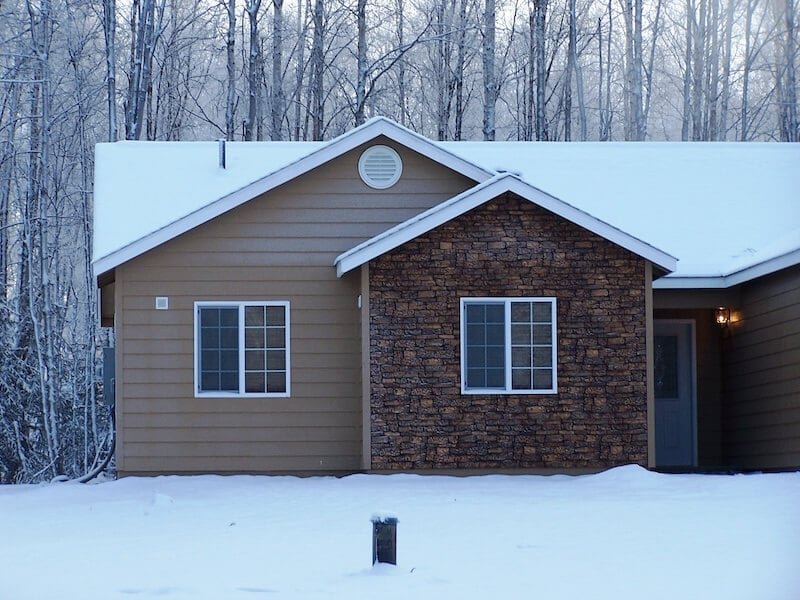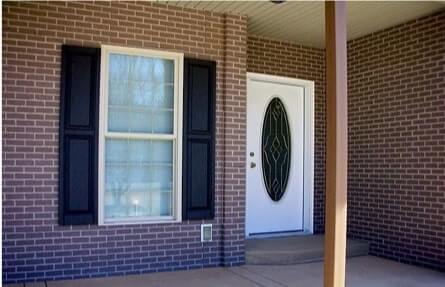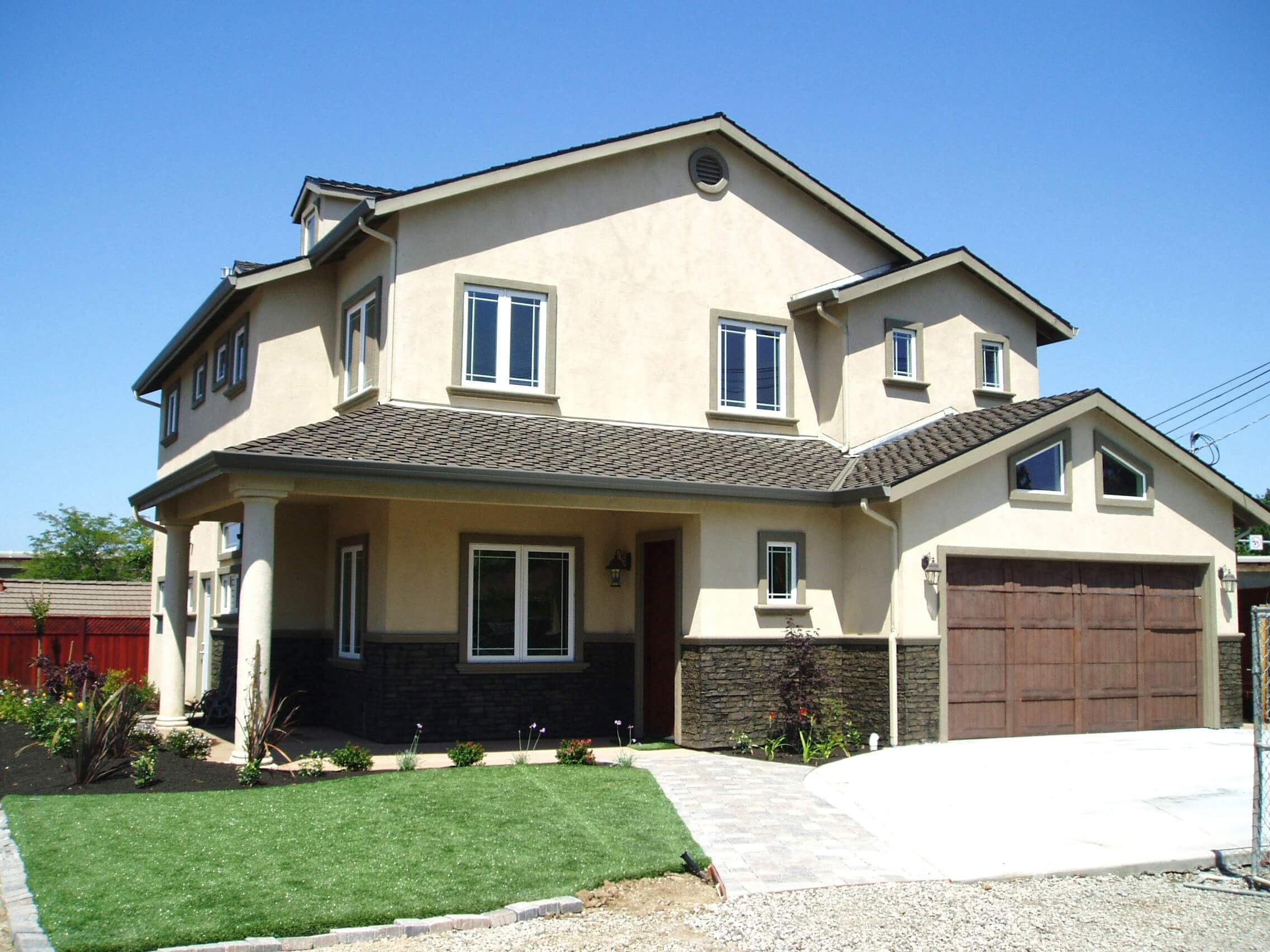
Most homes have one detail that quietly undermines curb appeal: an exposed concrete foundation. That strip of gray block at ground level often stands out against finished siding, fresh paint and carefully planned landscaping. Once you notice it, it’s hard to ignore.
The good news is that there are several foundations covering ideas you can explore to improve visual continuity and create a more polished exterior.
In the sections ahead, you’ll find practical options ranging from classic masonry finishes to creative, budget-conscious solutions. Get inspiration on how to cover a house foundation for an intentional look without overcomplicating the project.
What To Consider Before Covering a Foundation
Before digging deeper into curb appeal foundation ideas, proper moisture control should be established first to protect the structure below. Thus, the covering you choose should allow the wall to breathe and prevent moisture from being trapped behind it.
Other essential factors to consider include:
- Materials vs. Climate: Choose materials suited to your region. For example, stucco forms a tight, seamless barrier that repels rain, yet it may crack in cold climates with freeze-thaw cycles.
- Blending vs. Contrast: Beiges, grays, or earth tones blend well with most exterior colors. On the other hand, high-contrast finishes can make a bold architectural statement, but they must be balanced with the overall palette.
- Budget and Durability: Define your range early. Low-cost options like paint deliver a quick refresh, while mid-range materials such as faux stone or brick panels provide a stronger visual impact. High-end solutions like natural stone veneer cost more upfront, but they offer long-term durability.
Top Foundation Covering Ideas
Once you’ve addressed moisture, climate and budget considerations, the next step is choosing a finish that fits your home’s style. Some options offer long-term performance, while others provide faster upgrades.
From textured stone surfaces to clean architectural lines, these solutions can help you hide exposed foundation while transforming your exterior.
Faux Stone Wall Panels
Faux stone panels are lightweight cladding designed to replicate the look of real masonry. Manufactured from high-density polyurethane or fiber-reinforced cement, they create convincing stacked-stone or ledgestone textures at a fraction of the cost of quarried stone.
They’re also much lighter than natural stone and cut in interlocking sections, so installation is a manageable DIY foundation cover project. Many homeowners choose faux stone for foundation cover-up because the panels deliver realistic depth and variation without the labor or structural demands of full masonry.
Natural Stone Veneer
Natural stone veneer uses real stone cut into thinner sections and adhered to the foundation surface, creating an authentic, tactile finish with rich color variation and depth. This approach works exceptionally well on traditional, craftsman or rustic homes where permanence and material integrity matter. 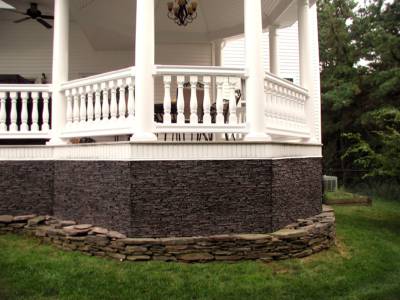
While natural veneer can dramatically boost curb appeal and home value, it comes at a premium. It is heavy, usually expensive and requires skilled masons for installation.
Brick Panels or Thin Brick
While brick remains one of the most recognized exterior finishes, solid brick requires structural support and significant labor. Thin brick veneer and faux brick panels provide the same traditional look without a full masonry build.
These lightweight systems snap or adhere directly over concrete or foundation skirting, reducing installation complexity. Available in finishes ranging from classic red to whitewashed or weathered styles, they offer homeowners the flexibility of brick texture with a more streamlined process.
Stucco Finish
Stucco is a cement-based plaster applied over the foundation to create a smooth or lightly textured surface that can be painted or tinted to match siding and trim. It works exceptionally well on modern, Mediterranean or minimalist homes where a seamless finish is preferred.
Material costs are relatively low, but achieving an even result requires skill, so it’s typically not a simple DIY foundation cover project. Nevertheless, when properly installed, stucco can last decades while providing fire resistance and a durable surface barrier.
Lattice Panels With Plants
Wood or vinyl lattice makes an inexpensive, decorative foundation screen. These crisscross panels create a grid that you can mount or lean against the foundation.
Lattice works well when paired with climbing plants. Clematis, jasmine, ivy and roses can be trained along the pattern, turning a plain base into a green backdrop. However, it does not provide weather sealing on its own, so it is mainly used as a design enhancement rather than as a structural covering.
Wood Skirting (With Waterproof Sealants)
Wood panels or boards can enclose a foundation with a warm, natural look. For example, vertical cedar boards or tongue-and-groove planks can introduce a cottage or chalet-inspired feel. This approach works well for homes with rustic trim or farmhouse detailing.
However, wood must be protected from moisture. Exterior-grade sealant or paint should be applied after installation, and routine maintenance is necessary. Without sealing, wood can warp or deteriorate over time.
Vertical Metal Panels
Metal panels have moved beyond barns and warehouses into residential design, where they create a clean, modern look. Corrugated or vertical metal siding adds strong visual contrast to foundations, especially against light-colored walls. This makes it a good fit for contemporary, urban or modern farmhouse homes.
Beyond appearance, metal is durable. It resists fire, insects and rot. Installation over flat concrete is relatively straightforward, but keep in mind that metal can dent from impact and may amplify sound without insulation behind it.
Decorative Concrete Panels
Decorative precast concrete panels are worth considering if you’re looking for a high-end, architectural flair. They can be cast with textures that resemble stone, wood grain or geometric patterns, adding depth and shadow to any surface.
Because the panels are concrete, they are durable and long-lasting. However, installation typically involves professional placement and anchoring due to the weight.
Painted Foundation With Textured Coating
Painting the foundation remains one of the simplest and most budget-friendly upgrades you can make for your home. A high-quality masonry paint or thin textured coating can quickly improve the appearance and help the base of the home blend with the siding or trim.
For many homeowners, this serves as a short-term refresh before resale or as an entry-level improvement. Still, this approach is mainly cosmetic, even with weatherproof paint. Over time, fading and chipping may require touch-ups.
Why Faux Wall Panels Make a Great Foundation Covering Solution
Traditional stone and brick require mortar joints, periodic repointing and sealing. Faux wall panels eliminate those steps. There are no mortar lines to maintain, and routine hose cleaning is typically enough to keep the surface looking sharp.
Installation is also far less labor-intensive. Many panels are molded with interlocking edges and fasten directly to a solid backing with screws and adhesives. This reduces complexity and speeds up the process.
Design flexibility is another advantage. Manufacturers like Texture Plus offer hundreds of textures and color variations. Their design visualizer lets you explore panel pattern combinations before committing, allowing you to create a tailored look without custom masonry work.
You get a realistic stone or brick appearance at a fraction of the cost, with the architectural impact of masonry and far greater efficiency.
Tips for Installing Panels or Covers on Foundations
Understanding how to cover house foundation surfaces properly is just as important as choosing the right material. Careful preparation and correct installation methods help your covering perform well and maintain its appearance over time.
- Prepare Surfaces: Remove loose paint or debris and repair any concrete cracks or spalling. For masonry cladding, install the appropriate base layer to ensure the new material bonds well.
- Use Proper Adhesives and Sealants: Select products rated for exterior use. Stone or brick veneer typically requires polymer-modified thinset or mortar. Meanwhile, lightweight panels are often attached with high-strength exterior construction adhesive, combined with mechanical fasteners.
- Seal Seams and Trim Corners: After positioning panels, fill seams, joints and edges with color-matched caulk or filler. This improves appearance and helps reduce moisture intrusion.
- Plan for the Weather: Adhesives and mortars require dry conditions to cure effectively. Install during moderate temperatures and avoid working in the rain.
- Know When To DIY and When To Hire: Working with lighter materials, such as faux stone for foundation covers, is often manageable. However, larger stucco projects or heavy natural veneer installations generally require professional expertise.
Add Lasting Curb Appeal to Your Exterior With Texture Plus Faux Wall Panels
There are many ways to improve the look of your home’s base, from permanent masonry finishes to decorative and budget-conscious upgrades. What’s exciting is that, with these foundation covering ideas, there is a solution that fits your goals and preferences.
Among these options, faux wall panels stand out for balancing style, efficiency and cost. They deliver realistic texture without the labor demands of full masonry, making them a practical solution.
If you want the look of stone or brick without the weight or installation timeline, explore our faux wall panels at Texture Plus. With a wide selection of finishes and durable construction, it’s easy to find a panel that fits your design goals. Not sure where to start? Try our design visualizer to preview different textures and colors before you order.