When a room needs a makeover, sometimes a fresh coat of paint is not enough to create visual interest. Wall treatments such as trim, wainscoting, and paneling add depth while protecting areas of your walls from everyday wear.
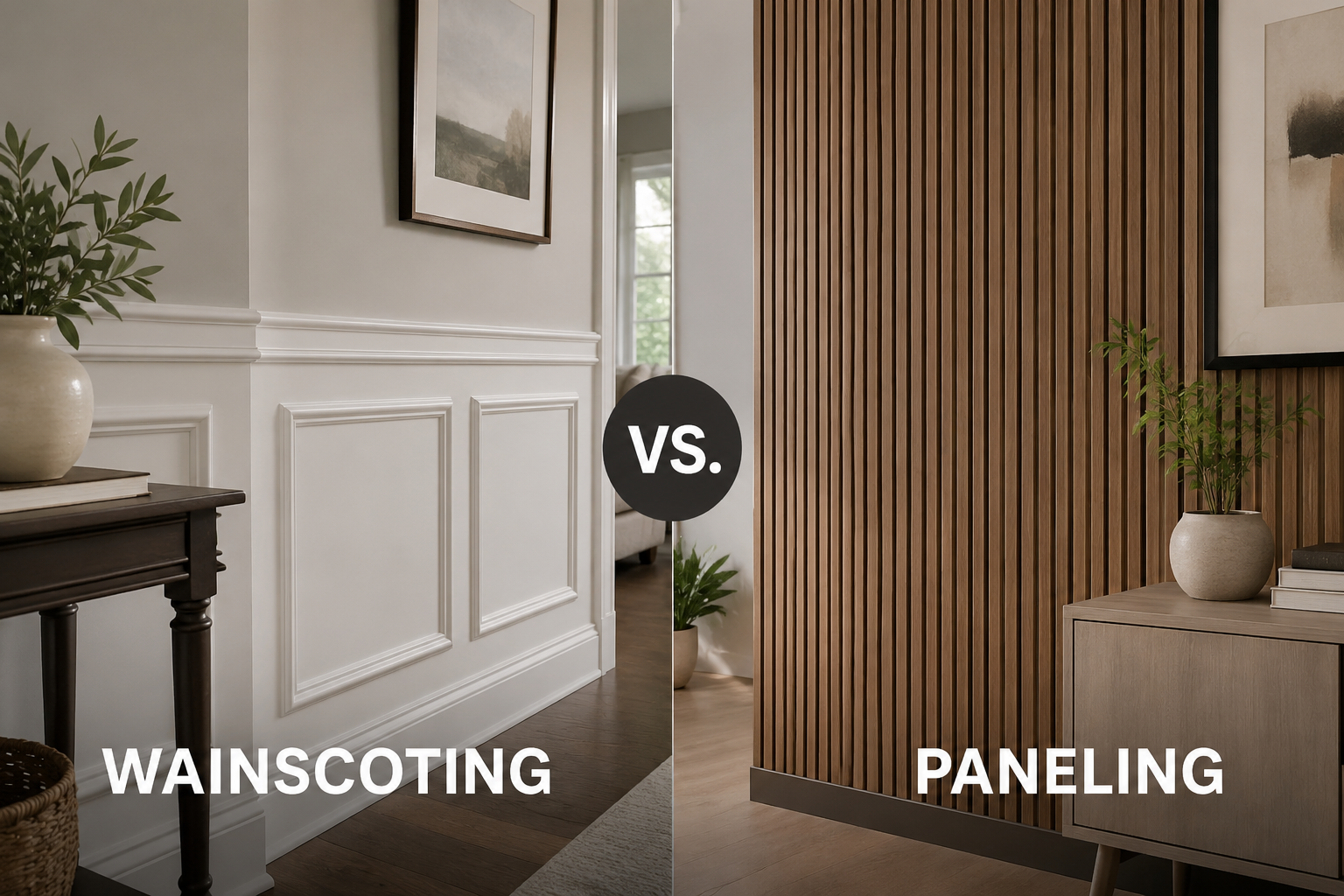
If you are deciding between wainscoting and paneling, the right choice depends on what you want to achieve. Wainscoting is a specific type of paneling, but the term paneling also includes full-wall installations, accent walls, and other decorative wall panels that extend beyond the lower portion of a wall.
Below, we break down the difference between wainscoting and paneling and explain how Texture Plus faux wall panels can create brick, stone, or wood looks with a straightforward panel-based installation.
What Is Wainscoting?
Wainscoting is one of the most common interior wall treatments. It covers the lower portion of a wall, often the bottom third, bottom half, or the area up to chair-rail height. Historically, it was used to add a protective layer over plaster in areas exposed to scuffs from chairs and everyday traffic.
Today, wainscoting is often used to create structure and proportion. It introduces a clear horizontal line and creates a more durable lower section in busy spaces. For DIY installations, one of the most important considerations is keeping the height line level throughout the room.
Wainscoting is commonly made from wood, MDF, PVC, or faux panels. Popular styles include beadboard, raised-panel, and flat or Shaker-style designs. It is frequently used in entryways, hallways, dining rooms, stairwells, and powder rooms, where walls tend to experience more day-to-day wear.
What Is Wall Paneling?
Wall paneling is a broader category. It can cover a full wall, an accent wall, a ceiling, or a partial section using panels, planks, or modular pieces. Depending on the pattern, depth, and finish, the style can feel rustic, industrial, modern, or traditional.
Paneling can also help conceal patched drywall, uneven surfaces, or outdated textures that you do not want to skim-coat. Common wall paneling styles include shiplap, board-and-batten, modern slat walls, and decorative panels with dimensional patterns.
Faux wall panels are designed to replicate materials such as brick, stone, wood, or concrete. Texture Plus panels are a practical choice when you want the look of masonry or natural materials with a predictable layout and panel-based installation, whether you are covering a full wall or creating a smaller accent area.
Key Differences Between Wainscoting and Paneling
Wainscoting and paneling may look similar at first glance, but they serve different purposes and are typically used in different ways.
The biggest difference is coverage. Wainscoting is installed on the lower portion of a wall, usually covering the bottom third or half of the surface. Paneling, on the other hand, can be installed on an entire wall, a partial wall, or even a ceiling, making it a more flexible design option.
Their design origins are also different. Wainscoting has traditional and Colonial roots and is commonly found in formal dining rooms, hallways, entryways, and other classic interiors. Paneling includes a much broader range of styles, from rustic farmhouse shiplap to contemporary slat walls and modern decorative wall panels.
Function is another key distinction. Wainscoting is often used to add architectural detail while protecting lower walls from scuffs, scratches, and everyday wear. Paneling is generally chosen to add texture, create visual interest, cover imperfections, or serve as a statement feature within a room.
Installation requirements can vary significantly as well. Traditional wainscoting projects typically involve extensive trim work and careful measurements to maintain a consistent height throughout the room. Paneling projects often focus more on panel layout, seam placement, and edge finishing, with installation difficulty varying depending on the product being used.
Cost considerations differ, too. Wainscoting expenses are often driven by trim materials, painting, and finish work. Paneling costs are usually influenced by the type of material selected and the total wall area being covered.
From a design perspective, wainscoting creates a structured, tailored appearance that complements traditional and transitional homes. Paneling offers greater design flexibility and can range from subtle and understated to highly textured and dramatic, depending on the style selected.
Finally, each option tends to work best in different spaces. Wainscoting is commonly used in dining rooms, hallways, stairwells, and entryways where durability and classic detailing are priorities. Paneling is frequently installed in living rooms, basements, offices, bedrooms, and accent walls where visual impact and texture are the primary goals.
Which Should You Choose?
Start by deciding what you want the wall treatment to accomplish. Are you looking for a classic, structured detail that protects the lower part of the wall? Or do you want to add texture and transform the appearance of a larger surface?
It also helps to consider how high you want the treatment to extend. Wainscoting can affect a room’s sense of balance, especially on short walls, along staircases, or in rooms with large windows. With paneling, the main decisions involve the scale of the texture, seam placement, and whether you want to cover the entire wall or only a section.
Choose Wainscoting If You Want:
- A classic look that suits traditional or transitional homes
- A scuff-resistant lower wall in hallways, dining rooms, or stairwells
- A two-part wall with a treatment below and paint or wallpaper above
Choose Paneling If You Want:
- A feature wall with stronger texture
- A way to cover surfaces you do not want to skim-coat or retexture
- The flexibility to install the treatment at full height, partial height, or on a ceiling
You should also consider how the material will perform in the room. In basements, laundry rooms, or areas near bathrooms, moisture resistance is important. Wood-based products can be sealed against dampness, while materials such as PVC are designed to handle moisture and may be easier to maintain over time.
Style also depends heavily on execution. Clean spacing, straight lines, and a panel scale that suits the room can make the difference between a timeless result and one that feels dated. Well-planned trim, corners, and edge details help create a professional finish.
Pros and Cons of Wainscoting vs. Paneling
Both wainscoting and paneling can add character and visual interest to a room, but each comes with its own advantages and limitations. Understanding the strengths and drawbacks of each option can help you choose the right wall treatment for your space.
Wainscoting Pros
One of the biggest benefits of wainscoting is the architectural detail it adds to a room. It creates a structured, finished appearance that works particularly well in traditional and transitional homes. Because it covers the lower portion of the wall, wainscoting also provides added protection against scuffs, scratches, and everyday wear in high-traffic areas such as hallways, dining rooms, and stairwells.
Another advantage is how seamlessly it integrates with existing trim work, crown molding, and other classic design elements. This makes it a popular choice for homeowners who want to add character without dramatically changing the style of a room.
Wainscoting Cons
The biggest drawback of wainscoting is the amount of finish work involved. Traditional installations often require precise measurements, extensive trim work, caulking, sanding, and painting to achieve a polished appearance.
Wainscoting is also less effective when the goal is to add texture across an entire wall. Since it typically covers only the lower portion of a surface, homeowners looking for a dramatic feature wall may find paneling to be a better fit.
Additionally, costs can increase quickly when using complex trim profiles or custom millwork, especially in larger spaces.
Paneling Pros
Wall paneling offers significantly more design flexibility than traditional wainscoting. It can be used on full walls, partial walls, ceilings, and accent areas, making it suitable for a wide variety of design styles ranging from rustic farmhouse to sleek contemporary interiors.
Paneling is also an effective way to cover uneven drywall, patched surfaces, or outdated wall textures without extensive prep work. Many decorative wall panel systems are designed with DIY installation in mind, allowing homeowners to achieve a custom look with less labor and fewer specialized tools.
Because paneling is available in a wide range of materials, textures, and finishes, it can create everything from subtle visual interest to dramatic statement walls.
Paneling Cons
One challenge with paneling is that installation mistakes can be highly visible. Misaligned seams, uneven cuts, and poorly planned layouts can stand out and detract from the finished appearance.
Material selection is also important. Wood-based products and non-moisture-rated panels may absorb moisture and swell over time if installed in damp environments without proper sealing.
Finally, heavily textured or dark panel designs can sometimes overwhelm smaller rooms if used excessively. Choosing the right scale, pattern, and placement is important to maintain visual balance within the space.
A Simpler Alternative: Faux Wall Panels
If you like the look of either paneling or wainscoting but want a simpler installation process, faux wall panels offer an attractive middle ground. They can replicate the appearance of wood, brick, stone, or other materials while reducing installation time and maintenance requirements.
Whether you’re creating a traditional wainscoting-style design or a full accent wall, faux wall panels provide a practical way to achieve a high-end look without the complexity of extensive carpentry or masonry work.
How Faux Wall Panels Can Offer the Best of Both
Faux panels give you the appearance of paneling without requiring a carpenter for a full build-out or a mason for a brick or stone installation. You can create a wainscoting-style design by installing panels along the lower portion of the wall and finishing the top edge with a cap rail.
In damp spaces, a panel system designed for moisture resistance may be easier to maintain than a traditional wood assembly. With Texture Plus, you can build a full accent wall, create a wainscoting-style layout, or use moisture-resistant panels in basements and laundry rooms.
Examples to Picture the Difference
Entry Hallway
Wainscoting adds a durable, scuff-resistant lower wall while keeping the upper portion clean and uncluttered. It also introduces architectural detail, helping the entry feel more finished.
Basement Family Room
Paneling is a practical way to conceal patched drywall or uneven texture without committing to a full skim coat. It adds depth and visual interest, helping the room feel designed rather than purely utilitarian.
Small Office
A single accent wall creates a finished backdrop behind a desk or shelving. It gives the space a focal point and stronger contrast, which can make the room feel more polished, especially during video calls.
Add Character to Your Space With Texture Plus
Wainscoting and paneling differ mainly in placement, coverage, and purpose. When choosing between wainscoting and paneling, consider how much wear the room receives, the style of the home, and how much trim or finish work you want to take on.
Faux panels offer a practical, cost-conscious option for decorative wall panels or a faux wainscoting layout without requiring a full carpentry or masonry installation. Explore Texture Plus faux wall panel styles to find the right fit for your space, or contact the Texture Plus customer service team for help choosing a design, estimating materials, or planning an installation.